Italian perspective on mobility journey in Albania
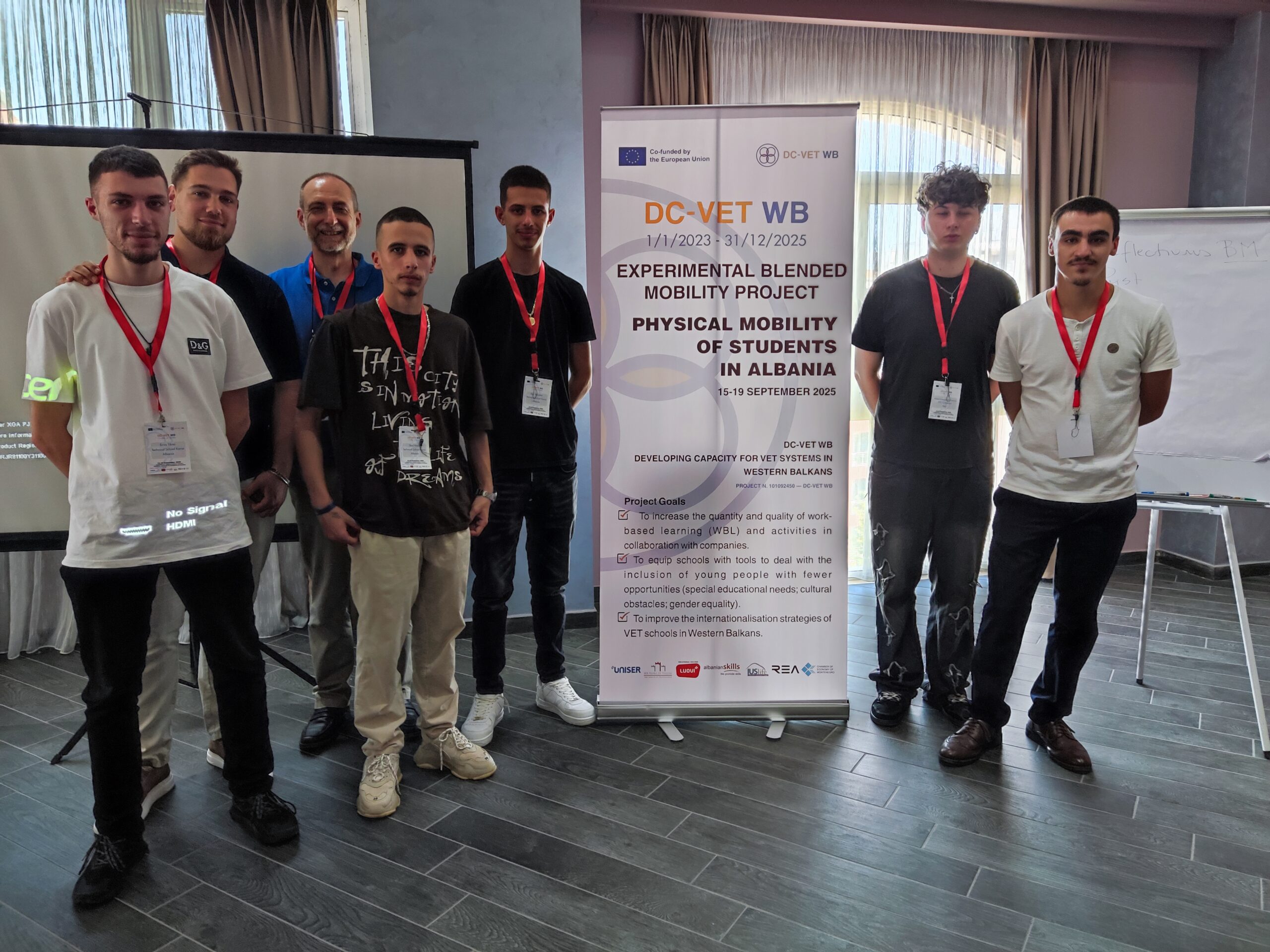
From September 16th to 18th, teacher Roberto Versari and the students Matteo and Francesco from ITTS G. Marconi of Forlì, participated in the physical mobility in Albania, experienced an intense and enriching journey combining cultural activities, training, and international collaboration. Are you curious to know more about their short mobility?
The first day focused on finalizing the project and presenting it to the participating groups. After the “Human Bingo” ice-breaking activity which helped students from different countries get to know each other, groups worked together to finalise their joint projects, showing that two hours of face-to-face interaction are far more effective than many hours of online meetings.
The evening featured an intercultural dinner where each group (Montenegro, Kosovo, Bosnia, Albania, Spain, Italy, Finland) performed traditional dances or songs and decorated candles, creating a joyful atmosphere of sharing.

On the second day, intercultural groups were formed to create and pitch innovative business plans. New teams combined their diverse skills to develop original and well-documented business ideas. Teachers observed that students worked very effectively without direct guidance, learning that stepping back and providing help only when necessary leads to better results. The day also included a cultural visit to the historic city center of Durres.
The third day was dedicated to final presentations of the blended mobility outcomes at Europe House in Tirana, followed by a certificate ceremony. Students visited Tirana city center, exploring its history, main monuments, and points of interest.

Overall, the blended mobility project fostered international collaboration, helping students improve language skills, intercultural teamwork, and mutual understanding. New friendships were formed, and the desire to explore different cultures and contribute to a united Europe was strengthened.
From a teacher’s perspective, the experience reinforced the importance of listening more and allowing students to develop their ideas independently. Italian students appreciated the opportunity to collaborate with peers from different countries and valued the project’s new methodology that encouraged autonomy and teamwork.
Cross-border cooperation projects like this one are essential for building bridges between cultures, enhancing skills and creating a shared European future.