
Third Transnational Meeting in Podgorica, 12-13 February 2025
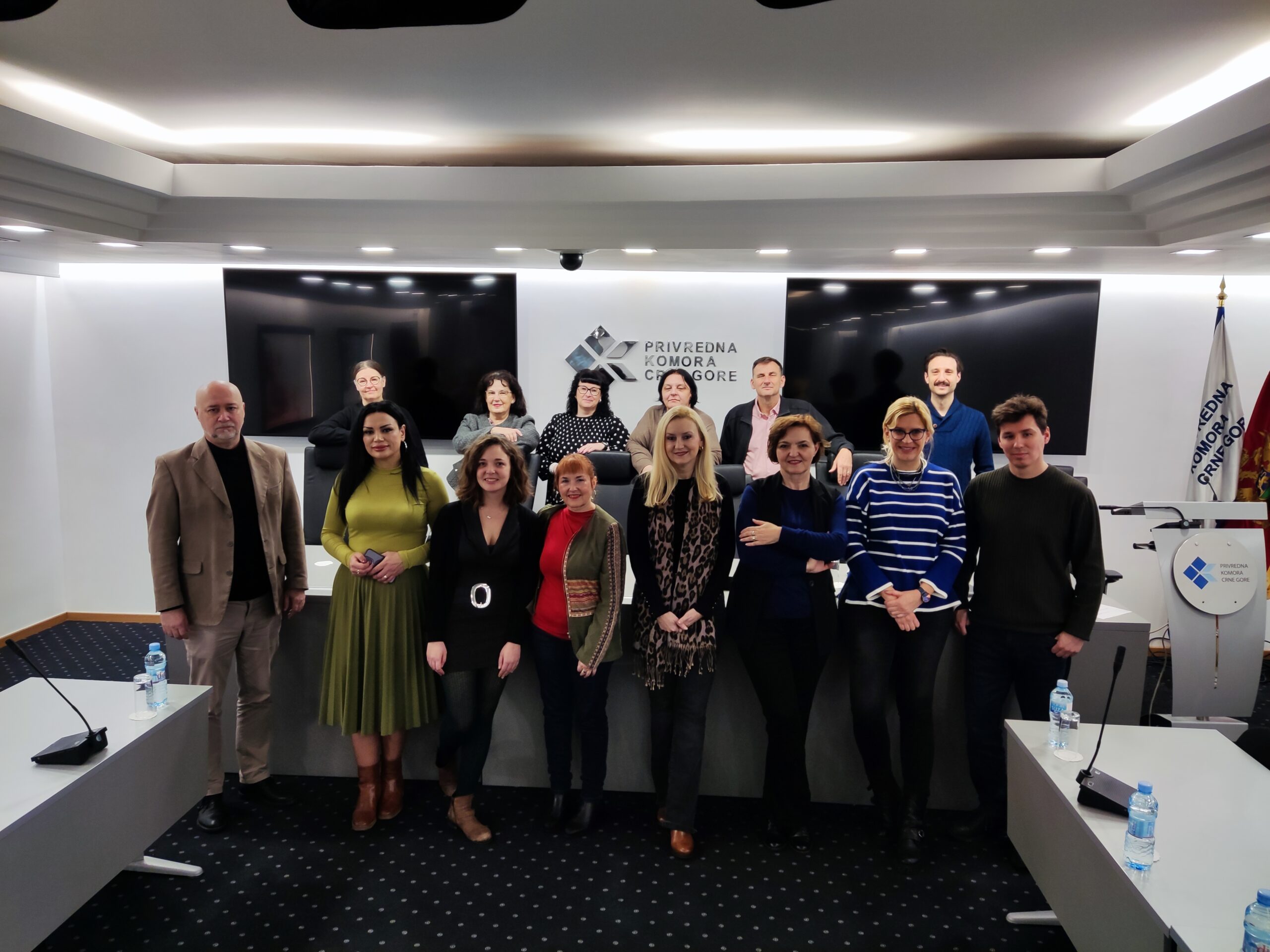
The Chamber of Economy of Montenegro hosted a two-day meeting of DC-VET WB project partners on 13th and 14th of February 2025. The DC-VET WB project aims to innovate vocational education in the Western Balkans through the exchange of practices and activities designed to strengthen the capacities of institutions and organizations involved in secondary vocational education. The project was initiated to enhance education quality and align professional competencies with labor market demands. By fostering collaboration among educational institutions, industry, and relevant stakeholders, the project seeks to modernize curricula and improve professional development for teachers, thereby contributing to workforce competitiveness and regional economic development.
During the meeting, participants reviewed ongoing activities. To date, the project has organized two training sessions for secondary vocational school teachers with EU partners, focusing on enhancing work-based learning activities. A particular emphasis was placed on including youth from vulnerable groups, such as individuals with disabilities, those facing cultural barriers (migrants, refugees), economic challenges, or geographical limitations (people from rural areas). In the upcoming period, the project will focus on developing online mobility for secondary vocational school students, enabling them to collaborate on joint projects in programming, engineering, and entrepreneurship.
This initiative will contribute to the development of students’; digital competencies and strengthen international cooperation and experience exchange.
The meeting concluded with a visit to the High School for Economics and Law Studies „Mirko Vešović,“ where partners from the DC-VET WB project spoke with teachers who participated in training organized within the project, as well as with students. During the visit, the partners had the opportunity to hear firsthand about the impact of the training on teaching practices and student engagement. The discussions highlighted the benefits of incorporating modern methodologies and work-based learning approaches, which have enhanced both teaching effectiveness and student preparedness for the labor market. The visit also served as an opportunity to explore potential future collaborations and further improvements in vocational education.
The meeting concluded that the DC-VET WB project’s results to date demonstrate significant
progress in modernizing vocational education and strengthening school capacities. The project is funded through the Erasmus+ program and involves seven partners from EU and IPA countries. Implementation will continue until December 2025.